
The professional stage lighting industry has changed significantly over the past two decades. What started with simple DMX512 cables has transformed into complex IP-based networks transmitting thousands of lighting universes simultaneously. Yet despite this technological leap, a challenge persists: incomplete protocol implementation.
When manufacturers build lighting fixtures and control systems, they face a choice. Invest months developing complete network protocol stacks, or implement just enough to get the product functional. Too often, the latter wins. The result? An industry where devices from different manufacturers struggle to communicate, advanced features remain untapped, and lighting technicians spend valuable time troubleshooting instead of creating.
Understanding the Protocol Landscape
Modern lighting control relies on several key protocols, each designed to solve specific challenges.
DMX512 established the foundation decades ago, offering reliable unidirectional communication over dedicated cables. Its 512-channel-per-cable limitation works well for basic setups, but complex modern fixtures (consuming multiple hundreds of channels each) quickly exhaust a single universe (i.e. cable).
RDM introduced bidirectional communication, transforming fixtures from passive receivers into intelligent devices that can report status, receive configuration updates, and communicate errors back to controllers.
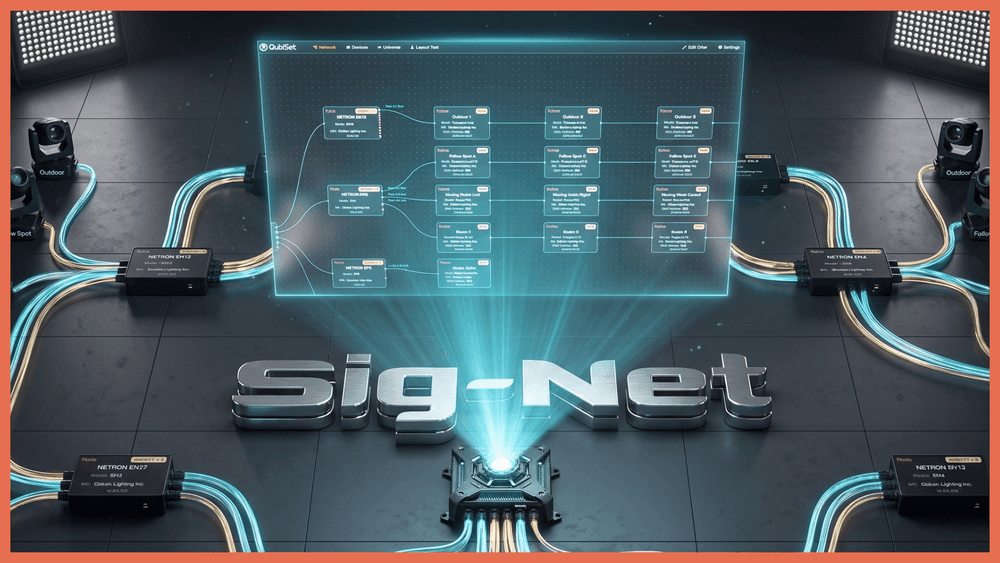
Art-Net and sACN addressed scalability by moving lighting control to IP networks. Art-Net can handle up to 32,768 universes while sACN supports 65,535, all transmitted over standard Ethernet infrastructure. Art-Net's widespread adoption comes from its cost-efficiency (the protocol is free for everyone to use), simplicity and backward compatibility, while sACN's efficient multicast design makes it ideal for large-scale installations.
RDMnet extends these capabilities across IP networks, enabling remote device management at scale and is a modern and more efficient alternative to Art-Net, utilizing TCP and a broker system.
The Implementation Gap
Here's where theory diverges from reality. Each protocol specification contains hundreds of features: discovery mechanisms, synchronization packets, status reporting, error handling, multicast management, and countless edge cases. Implementing all of this requires deep networking expertise and extensive testing across diverse network configurations.
Many manufacturers implement only the core transmission features. Discovery protocols get simplified or skipped. RDM support remains incomplete. Multicast handling assumes ideal network conditions. The result works in controlled test labs but fails unpredictably in real-world venues where switches, routers, and network topologies vary widely.
This creates cascading problems. Lighting designers must maintain separate configuration tools for fixtures from different manufacturers. Technicians spend hours troubleshooting devices that should auto-discover but don't. Advanced features like predictive maintenance and centralized monitoring remain theoretical because the underlying protocol support isn't reliable enough.
The Development Challenge
Why doesn't every manufacturer implement protocols completely? Because it's difficult. Building a robust protocol stack requires:
- Fully understanding the standards and how they connect
- Resolving eventual ambiguities in the standard documents
- Identifying edge cases
- Implementing discovery mechanisms like Art-Net Poll/PollReply content and intricacies
- Handling IGMP snooping and multicast routing correctly
- Managing synchronization packets for frame-accurate timing
- Supporting full RDM parameter identification and response chains
- Testing across mixed-protocol environments where Art-Net and sACN coexist
- Debugging behaviors that only appear in production networks, not test labs
Development timelines typically stretch three to six months or longer. And that's just for implementation. Maintaining compatibility as protocols evolve requires ongoing engineering effort.
A Different Approach
The lighting industry doesn't need every manufacturer to become networking experts. What it needs are complete, tested protocol implementations that fixture designers can integrate rather than rebuild.
This is the thinking behind pre-built network stacks: libraries that handle the full complexity of Art-Net, sACN, RDMnet, and related protocols. Instead of spending months implementing discovery protocols and debugging multicast edge cases, manufacturers can focus on designing fixtures.
QubiCore takes this approach. As a C-based library supporting multiple protocols with complete specification compliance, it runs across platforms, from small microcontrollers in fixtures to x86 systems in control software. The "always-on-top guarantee" means protocol updates get implemented centrally and distributed to all integrated products, ensuring compatibility as standards evolve.
Real-World Benefits
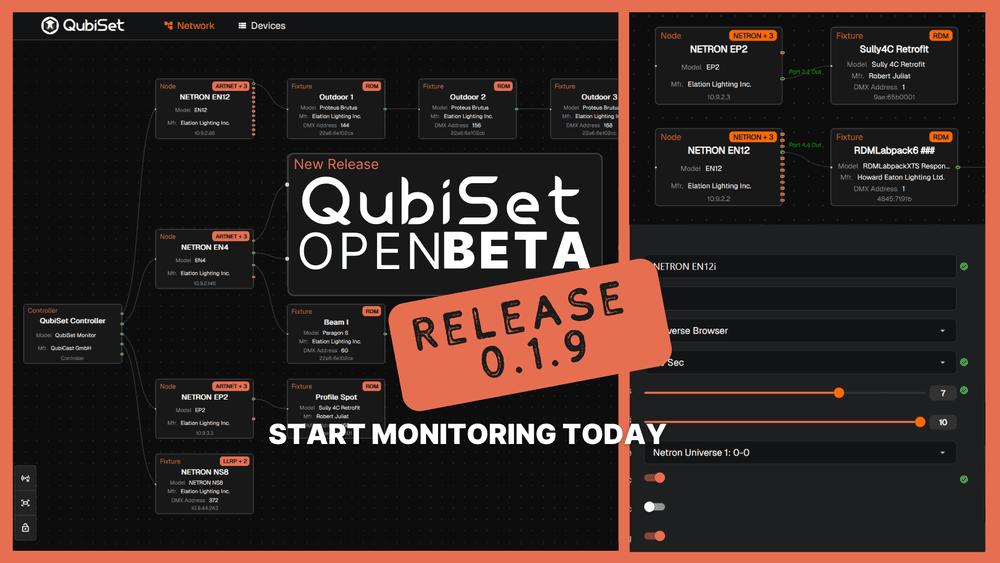
Consider a theater integrating fixtures from five different manufacturers. With complete protocol implementation across all devices, commissioning becomes faster. LLRP discovery finds every fixture regardless of IP configuration. RDM enables centralized configuration without accessing individual units. Monitoring software sees real-time status from all devices through standardized interfaces.
The lighting designer works from a single platform. The technician troubleshoots faster because error reporting is consistent. When a fixture manufacturer releases new models, they integrate without issues because they speak the same complete protocol language.
Looking Forward
As installations grow larger and more complex, the cost of incomplete protocol implementation rises. Mixed-manufacturer systems become harder to manage. Advanced features that could differentiate products remain unused because they can't rely on consistent protocol support.
Complete implementation isn't optional anymore. It's the foundation for what comes next: predictive maintenance that prevents failures before shows, unified monitoring that works across all equipment, network-level optimization that reduces latency and improves synchronization.
These capabilities exist in the specifications. The challenge is making them real in every fixture, every controller, every piece of software. That requires either every manufacturer investing heavily in networking expertise, or the industry embracing shared implementations that work reliably everywhere.
The future of lighting control depends on which path the industry chooses.